

It began with a single post — a grainy photo, a bold headline, and a claim that Virginia Giuffre had a second memoir ready to be released into the world. Within minutes, the internet had seized it, pulled it apart, speculated, questioned, embellished, and transformed it into something far larger than anyone could have anticipated. Whether fact, rumor, or a spectacular misunderstanding, what happened next illustrates a truth as old as media itself: nothing spreads faster than a secret claiming to expose power.
“Virginia Giuffre’s second memoir unveils new secrets and evidence powerful enough to shake the highest ranks — forcing those who once hid behind silence to finally face the truth.”
That was the sentence that ignited a wildfire.
From Reddit forums to TikTok deep-dives, from political Twitter to late-night commentary channels, the idea of a massive, secret-filled manuscript — allegedly over 600 pages long — has consumed online discussion. And if the viral posts are to be believed, the memoir is said to contain documents, testimonies, private notes, and unnamed individuals whose influence stretches far beyond ordinary public reach.
But what’s fueling the fire isn’t what people know.
It’s what they don’t.
A Teaser That Shocked the Internet
The first wave of posts described a book “unlike anything Giuffre has released before,” packed with material that had supposedly been kept hidden — intentionally or otherwise. No one had confirmed the book’s existence. No publisher had spoken. No official statement had been made.
But that didn’t slow the story.
Within hours, screenshots and re-uploads flooded social media feeds. Some claimed to have seen snippets of the manuscript. Others insisted they had access to a list of names — though no such lists were verifiable. A handful of creators claimed they had sources who had “read sections” or “handled documents related to the memoir,” though none offered proof.
Still, audiences were captivated.
Because the alleged content wasn’t just sensitive — it was explosive.
The Moment That Accelerated the Frenzy: A Stage, Two Hosts, and Too Many Questions
Then came the second detonation.
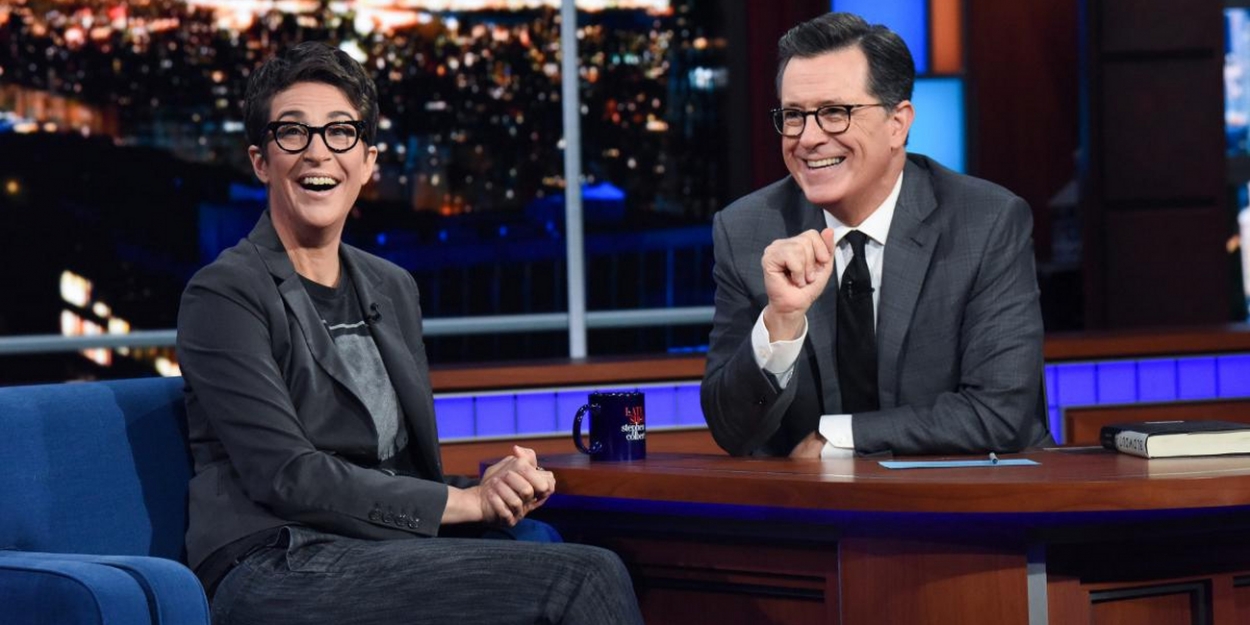
According to viral posts, something “never before seen” had occurred: Stephen Colbert and Rachel Maddow appearing together on stage, reportedly reacting to the new revelations. Clips circulated rapidly — though most were edited, spliced, or lacked context — claiming to show the two prominent hosts discussing the alleged memoir with visible discomfort, even alarm.
In some versions of the story, Colbert is said to have told the audience:
“This isn’t just another book. It’s a reckoning.”
Other posts attribute to Maddow a tense remark:
“People thought they were untouchable. They’re not.”
None of these quotes have been verified.
None of the videos appear in full, original form.
And yet — the idea of these two influential voices reacting with shock was enough to amplify the narrative into a global talking point.
Whether the moment truly happened or not became secondary.
What mattered was what people believed it meant.
And with that, curiosity turned into obsession.
The Dangerous Allure of the “List of Names”
Online discussions soon veered toward the biggest question of all:
Who is allegedly mentioned in the memoir?
The claims were always vague.
“Powerful figures.”
“Untouchables.”
“Names the world would never expect.”
But never specifics.
This deliberate gap — whether intentional or simply the nature of rumor — fueled more speculation than any actual list ever could. The absence of detail gave the story oxygen. It allowed imaginations to run wild, connecting dots that may or may not exist.
People began creating theories, charts, videos, and entire discussion threads built around educated guesses, fragments of context, and pure conjecture. Some commentators warned against believing anything without solid evidence. Others leaned into the mystery, weaving elaborate narratives of hidden networks, buried truths, and long-protected secrets finally coming to light.
The lack of clarity wasn’t a flaw — it was the hook.
After all, a locked door is always more tantalizing than an open one.
Why This Story Has Captured the World’s Imagination
To understand the frenzy, one must understand the cultural moment.
For years, the public has been increasingly aware of the ways in which powerful individuals can escape scrutiny. High-profile legal cases, leaked documents, whistleblower testimonies, and investigative reporting have all shaped a landscape where people are primed to believe that the truth is always just out of reach — concealed behind wealth, influence, or institutional silence.
So when a claim emerges suggesting that a 600-page memoir contains evidence challenging such power structures, even without confirmation, the narrative fits a familiar pattern:
-
The oppressed speaking out.
-
Hidden truths rising to the surface.
-
The powerful finally being confronted.
-
A reckoning long overdue.
Whether or not the memoir exists as described, the idea of it resonates with a society hungry for transparency and accountability.
That emotional truth is what drives engagement, outrage, hope, fear — and most importantly, conversation.
Skepticism, Support, and the Fight for the Narrative
The online world is now split into distinct factions.
1. The Believers
These are the people convinced that the memoir is real, the revelations are real, and the world is on the brink of an unprecedented expose. They analyze every claim, every screenshot, every alleged quote.
2. The Skeptics
They demand proof.
They question inconsistencies.

They warn that misinformation spreads faster than facts — and that powerful narratives often turn out to be distorted ones.
3. The Opportunists
Creators who capitalize on the story’s virality, releasing videos, commentary, live streams, and theories to feed the endless appetite for updates.
4. The Cautiously Curious
Perhaps the largest group — those who don’t know what to believe but can’t stop watching.
This tug-of-war has only heightened the story’s reach.
Controversy breeds attention.
Uncertainty breeds fascination.
Mystery breeds momentum.
And right now, this narrative has all three.
The Real Question Isn’t Whether the Memoir Exists — It’s What This Reaction Reveals About Us
Even if the alleged memoir is exaggerated, misinterpreted, or entirely fictional, the world’s reaction tells a deeper truth:
People are desperate for accountability.
They crave transparency.
They distrust institutions.
They suspect shadows behind every headline.
And they are ready — eager — for stories that promise the unveiling of hidden wrongdoing, even if those stories come wrapped in ambiguity and unverified claims.
This phenomenon isn’t just about Virginia Giuffre.
It isn’t about Colbert, Maddow, or unnamed “powerful figures.”
It’s about a cultural shift toward skepticism, suspicion, and the relentless pursuit of truth — or something that looks like it.
So What Happens Next?
Right now, no one can say with certainty:

-
Whether the memoir exists in the form described
-
Whether its contents are as explosive as rumored
-
Whether any public figures are implicated
-
Whether Colbert and Maddow truly reacted as claimed
-
Or whether the entire narrative is the result of misinterpretation and online amplification
What we can say is this:
The story has already taken on a life of its own.
It has sparked debates, theories, warnings, excitement, and anger.
It has generated millions of clicks, comments, stitches, shares, and reactions.
It has become a modern myth — a digital wildfire traveling at the speed of curiosity.
And whether fact or fiction, truth or exaggeration, the conversation is far from over.
In fact, it’s just beginning.