
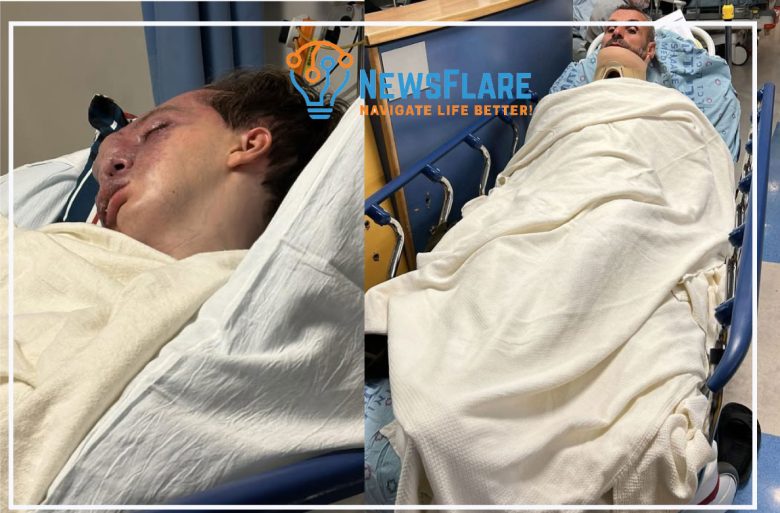
When you have a medically fragile child, hope becomes your morning coffee, your last prayer before bed, and every breath in between.
And today, one mother walked into a hospital room believing she would finally hear the words she had dreamed about for days:
“You can go home now.”
Instead, she heard something else.
Something that hit harder than any diagnosis, louder than any alarm, deeper than any fear:
“We’re admitting him to the PICU.”
Those nine words — heavy, sharp, immediate — pierced through her chest like winter air.
Not because he was dying.
Not because he was crashing.
Not because doctors had devastating news.
But because her child… her tiny fighter… simply needed more.
More eyes.
More hands.
More machines.
More vigilance than a general pediatric floor could ever provide.
And just like that, hope changed shape.
THE PLAN THAT VANISHED IN SECONDS
Families who live in hospitals learn a different kind of time.
Hours feel like days.
Days feel like weeks.
And the phrase “we might go home” becomes the closest thing to oxygen.
This mother had packed the diaper bag.
She had folded the blanket he loves.
She even allowed herself a small smile — the first in days — thinking about carrying him out the sliding entrance doors instead of watching them close behind her.
But hospital hallways are unpredictable landscapes.
Doctors entered the room.
They spoke gently — too gently.
And she could feel it before they said it.
“We’re sending him to the PICU.”
Her throat tightened.
Her knees weakened.
Her heart sank.
Not because she misunderstood the meaning — but because she understood it too well.
The PICU wasn’t a punishment.
It wasn’t a step backward.
It was the reality of a truth she lived every day:
Her child was fighting battles invisible to everyone else.
THE TRUTH BEHIND THE PICU DECISION
Doctors were clear:
He is sick — but not in the way people imagine when they hear “intensive care.”
His lungs?
Shockingly okay.
His labs?
Holding steady.
His vitals?
More stable than expected.
But the problem wasn’t one catastrophic issue — it was a thousand small ones.
He needed suction often.
He needed monitoring constantly.
He needed interventions promptly.
He needed a level of attention and rapid response that a general pediatric floor simply could not promise.
In other words:
He required a team whose eyes never look away.
He required the PICU.
And as terrifying as that sounds, to the mother… it was also a strange kind of comfort.
Because the PICU is where nurses move faster.
Where alarms receive immediate hands.
Where a cough, a breath pause, a small change in color — everything is noticed, every second.
For a medically complex child, the PICU isn’t the place you go when you’re losing.
It’s the place you go when you’re fighting.
“BUT HIS LUNGS ARE OKAY — HOW IS THIS POSSIBLE?”
That’s the sentence that stunned her.
She had braced herself for X-rays filled with shadows, for crackles in his breathing, for swelling or infection or collapse.
But no —
The doctors said his lungs looked…
Good. Surprisingly good. Miraculously good.
Even the heart monitor numbers — usually her worst enemy — offered a bit of peace.
But then came the part no parent ever wants to hear:
“It’s not just one thing.
It’s how many things he needs at once.”
This isn’t sickness measured in severity.
This is sickness measured in complexity.
And complexity, especially in a fragile child, demands the highest level of care.
The PICU wasn’t punishment.
It was protection.
THE WAIT FOR THE CULTURE — A CLOCK THAT WON’T STOP TICKING
They took a phlegm culture.
Not because they expected disaster, but because they refuse to gamble with a child this delicate.
Cultures take time.
Time — the one thing parents in hospitals never have enough of.
Hours stretch.
Minutes slow.
Every beep feels like an accusation, every silence feels like a trap.
But she held onto the only good news she had:
Nothing alarming yet.
And in the world of pediatric medicine, “nothing alarming” is sometimes the most beautiful sentence a parent can receive.
THE EMOTIONAL WHIPLASH OF HOPE AND FEAR
One moment she thought she’d be home by sunset.
The next, she was emotionally packing herself into a PICU waiting room, clutching a coffee she forgot she even bought.
This is the emotional whiplash only hospital parents understand:
Hope → Fear → Relief → Anxiety → Gratitude → Exhaustion → Hope again.
A cycle that never ends.
A cycle that shapes warriors.
And through all of that, one truth remains:
She is not weak for being tired.
She is not dramatic for being scared.
She is not overreacting for crying in the hallway.
She is a mother.
And a mother in crisis feels every emotion in the world—at once.
THE BEAUTY HIDDEN IN THE PAIN
There is something powerful about moments like this.
It’s the moment when a parent realizes that “strength” isn’t loud.
It’s quiet.
It’s sitting beside a hospital bed whispering, “I’m here.”
It’s signing papers with shaky hands.
It’s learning medical terms you never wanted to know.
It’s trusting teams you met only days ago.
It’s choosing hope again and again, even when hope feels like a fragile thread.
And today, she chose hope.
She chose to see the good news:
Clear lungs.
Stable vitals.
A team alert enough to catch things early.
A child still fighting.
She chose gratitude over fear — not because fear went away, but because she refused to let it win.
THE QUESTION EVERYONE IS ASKING: WILL HE BE OKAY?
Doctors won’t make promises.
PICU teams don’t speak in absolutes.
But today, the signs point toward stability, not crisis.
Toward monitoring, not emergency.
Toward caution, not catastrophe.
They expect a short stay, if things continue this way.
And that’s what the mother is holding onto:
Not the fear of the PICU, but the privilege of having a team who refuses to ignore even the smallest shift in her child’s fragile body.
THE FINAL MESSAGE — THE ONE THAT’S GOING VIRAL
Tonight, thousands of parents online are sharing her words.
Because they’ve been there.
Because they know the feeling.
Because this story is every hospital parent’s story:
“We didn’t go home today.
But they’re taking care of him.
And that’s enough for now.”
And sometimes…
that truly is enough.