

For more than two decades, Richard Hammond and his wife Mindy were seen as one of television’s strongest, most enduring partnerships — the kind of couple that survived fame, pressure, near-fatal accidents, brutal filming schedules, and the relentless scrutiny that comes with being one of Britain’s most recognisable TV personalities. To many, theirs was the marriage that would never break. They seemed unshakable; a team who had held hands through the storms of life and somehow always found their way back to each other. But behind that image, behind the polished premieres and smiling red-carpet photographs, a quieter, far more devastating story had been unfolding — one that no one saw until it was too late, not even Richard himself. And now, after 23 years together, the truth behind their emotional split is finally surfacing, revealing a silent battle that had been chipping away at their foundation for two full decades. 
Richard has never been one to publicly share the wounds beneath his humour, his signature grin, his self-deprecating charm — the traits that made him a national favourite. But in the months since the separation, friends say something fundamental in him has shifted. He has stopped pretending that everything was “fine.” He has stopped brushing off the strain. And most painfully, he has stopped running from the moment he now calls “my biggest failure as a husband.” It wasn’t a scandal, an affair, or some explosive betrayal that broke them. It was something far more universal, far more relatable, and far more tragic: a long, unspoken accumulation of emotional distance, years of unresolved hurt, and a final moment when Mindy, exhausted from fighting a battle alone, simply couldn’t stay. 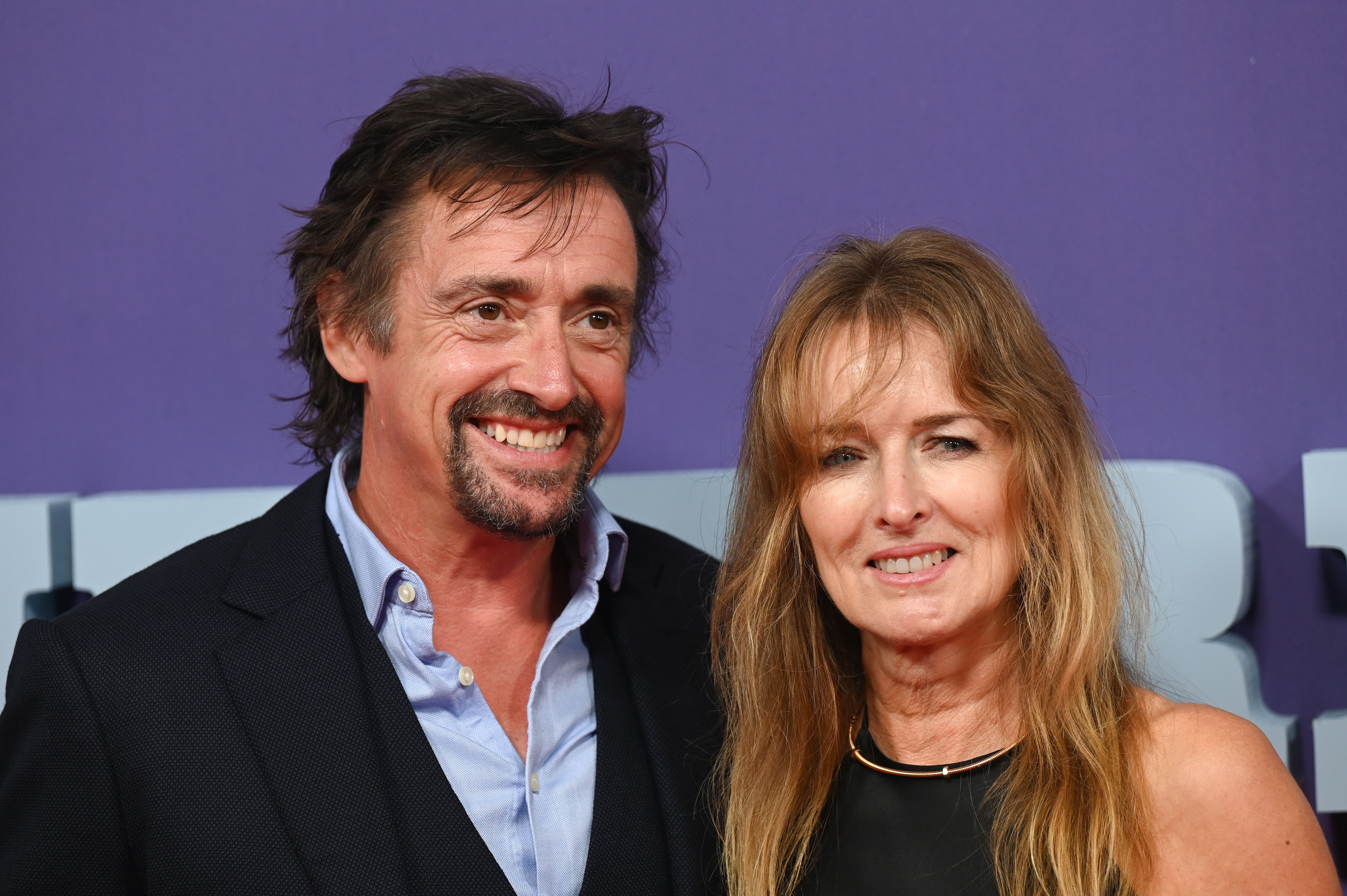
It began slowly, as these things often do — with small misunderstandings, passing comments, promises postponed because of work, moments when the demands of television swallowed up the tender, unseen parts of their marriage. For years, Mindy carried the weight quietly, convincing herself it was temporary, that a calmer season would come, that “this is just what life with a man whose job is dangerous and all-consuming looks like.” She loved him deeply, fiercely, and with a patience that many say was unmatched. She stayed by him through the darkest hours of his 2006 crash, through recovery, through long stretches of filming away from home. But slowly, almost imperceptibly, something in her began to break — not because she loved him less, but because she had stopped feeling loved back in the way she needed.
Richard admits now that he didn’t see it. He didn’t pay attention to the way her smile changed. He didn’t notice how often she withdrew after arguments. He misread silence as peace when it was, in fact, a plea for help. He thought time would fix everything — that their history would carry them, that love alone would be enough. But nothing heals without being tended to, and love, even the strongest kind, can fray when left unattended.
Friends recall that the final year of their marriage was the most fragile. The house felt heavy, Mindy’s laughter felt quieter, and Richard was often somewhere else — physically on the road, mentally preoccupied, emotionally unaware of the growing distance. They still functioned as a family, still shared daily routines, still smiled for the cameras, but something essential had already cracked beneath the surface.
And then came the moment Richard now cannot forgive himself for — the missed “last chance.”
It was a night Mindy had reached the edge. She wasn’t angry, just tired. Bone-tired. The kind of exhaustion that comes from feeling unheard for too long. She needed him. She needed a sign he understood the storm inside her. She needed him to come home, to hold her, to tell her she wasn’t alone in the fight to save their marriage. But Richard wasn’t there. Not physically. Not emotionally. Not in the way that mattered.
He didn’t know it was that night — the night she would ask for separation, the night she would let go of the hope she’d been clinging to. He didn’t recognise the final warning signs. And so he didn’t go home. He didn’t show up. He didn’t make the one gesture that could have changed the course of everything.
When Mindy told him it was over, there was no shouting. No cruelty. Just heartbreak. A quiet, devastating resignation.
Richard collapsed under the weight of it. It wasn’t until he saw the pain in his daughters’ eyes that he fully understood the magnitude of what he had missed. But nothing prepared him for the moment his daughter — the child who had watched the cracks grow and hoped her parents would find their way back — asked him the question that still haunts him. 
“Dad, you should have gone home, held Mum in your arms and begged her to stay. You know how much she loved you. Why did you let her say goodbye alone?”
There are words in life that strike like a blow — not because they’re cruel, but because they’re true. That was the moment Richard broke. The moment he saw himself not as the beloved TV host, not as the accident survivor, not as the jokester of The Grand Tour — but as a man who had failed to show up for the person who had shown up for him for 23 years.
Friends say he replayed that sentence for weeks. “Why did you let her say goodbye alone?” He began reading old texts, replaying old arguments, remembering moments he brushed off that meant everything to her. He realised it wasn’t one mistake — it was a hundred small ones. A hundred moments she needed reassurance, affection, or tenderness, and he assumed she was fine. He assumed they were unbreakable. He assumed she would always be there.
But even the strongest women reach a point where self-preservation outweighs loyalty. And Mindy, who had spent two decades holding Richard together through his darkest moments, eventually realised no one was holding her together through hers. 
In the weeks after the separation, Richard tried everything — not to win her back, but simply to understand. He began therapy for the first time. He apologised without defensiveness. He cried for the marriage he had taken for granted. For the years he thought were secure. For the woman he still loves but can no longer call his wife.
Friends say he is “not the same man.” The separation humbled him, softened him, changed him in ways his crash never did. That accident threatened his life. Losing Mindy threatened his identity. He has become reflective, emotional, quieter. He talks openly about vulnerability, about fear, about the cost of assuming someone will always wait for you.
Mindy, for her part, is healing in her own quiet way. She carries the sadness of a love she didn’t want to end, but also a newfound strength. For the first time in years, she is prioritising her own emotional well-being. She does not speak ill of Richard. She still calls him a good man. But a good man can still forget to be a present husband. A good man can still lose the woman he loves if he doesn’t learn to communicate, to show affection, to recognise the silent wounds that grow in the spaces between everyday moments.
Those close to her say she is not angry anymore — just relieved to no longer feel invisible.
As for their daughters, they love both parents fiercely, but they saw more than either of them realised. Children always do. They saw the nights their mother cried quietly. They saw the tension behind smiles. They saw the missed chances, the widening cracks, the emotional distance. And when the marriage finally ended, they weren’t surprised — just devastated.
One daughter told friends, “They stopped being a team long before they admitted it.” That single sentence captures the tragedy of their story.
Richard now spends most of his time reflecting on how easily love can erode when both people assume there will always be more time — more chances — more tomorrows to repair what today has broken. He speaks to friends about how blind he was to the emotional labour Mindy carried. He regrets the nights he chose work over listening, distraction over connection, silence over honesty. He regrets not fighting sooner. Not loving louder. Not recognising the quiet ways Mindy was slipping away.
He says he didn’t lose her in one night — he lost her over twenty years of moments he didn’t realise mattered.
Today, both Richard and Mindy are carving out new lives while maintaining respect, co-parenting with love, and healing separately. Observers say there is still warmth, still affection, still an undeniable bond between them — but the romantic partnership has ended. And perhaps the most heartbreaking truth is not that they stopped loving each other, but that they loved each other deeply and still couldn’t make it work.
Their story is not a scandal. It is a cautionary tale about emotional negligence, about the danger of assuming the person you love will always be okay, always be strong, always be there. It is a reminder that silence in a relationship is not peace — it is a signal. And if ignored long enough, it becomes a goodbye.
Richard now tells friends he wishes he could go back to that one night — the night his daughter later questioned him about — and simply drive home. Hold Mindy. Apologise. Ask what she needed. Show her that she wasn’t alone.
But life rarely offers second chances to fix the moments that matter most.
In the end, their 23-year love story didn’t break because of a single mistake — but because the quiet moments were the ones that went unanswered. And when silence becomes the loudest part of a marriage, love can crumble long before anyone says the words out loud.
Richard’s heartache is not just about losing a marriage — it’s about realising he lost the chance to save it.
Bài viết REVEALED: The Silent Battle That Broke a 23-Year Love Story — How Richard Hammond Missed His Last Chance, and the One Question from His Daughter That Finally Shattered Him đã xuất hiện đầu tiên vào ngày HOT.