
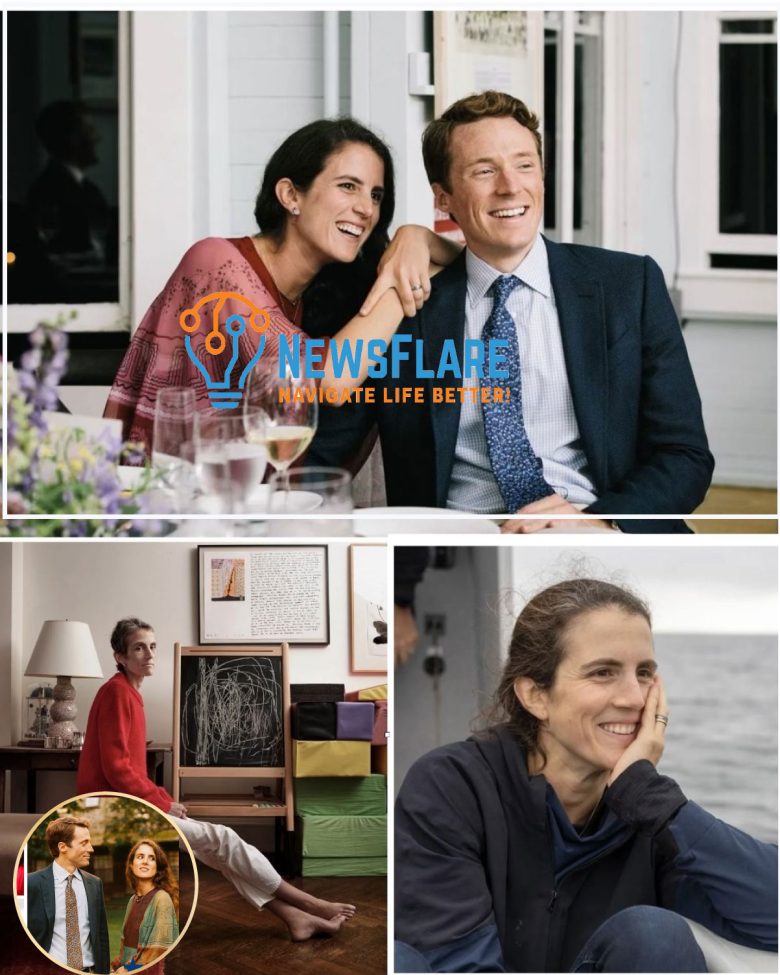
When Tatiana Schlossberg writes about the possibility of dying, there is no drama, no theatrics — only a rare clarity that feels both fragile and astonishingly brave. Her reflections read like fragments of a life held up to the light: a childhood best friend, a mud pie set aflame by accident, a boyfriend slipping into a slushy puddle during a snowy winter. Small, vivid moments that suddenly feel enormous now that illness threatens to steal away all the memories she hasn’t yet made.
On May 25, 2024, Tatiana and her husband, George, arrived at New York’s Columbia-Presbyterian Hospital. Ten minutes later, they were holding their second child — a perfect baby girl, pink-cheeked and calm. But before the glow of new parenthood could settle, a routine blood test delivered news that shattered the room.
A normal white blood cell count ranges from 4,000 to 11,000.
Tatiana’s was 131,000.
Doctors tried to reason their way through it. Perhaps a reaction to childbirth? Stress? Hormones?
Tatiana tried to laugh it off. “It’s not leukemia,” she reassured George.
But it was.
At just 34, a healthy journalist, environmental advocate, and daughter of Caroline Kennedy and Edwin Schlossberg, Tatiana was diagnosed with acute myeloid leukemia — a form with a rare mutation typically seen in elderly patients.
In one moment, her life — and the lives of those who love her — shifted irrevocably.
A Family Steeled by Love, Shattered by Fear
Her newborn was taken to the nursery.
Her parents arrived with her toddler son, who climbed into her hospital bed and pretended to drive it like a bus.
She had barely begun to introduce him to his baby sister when she was wheeled away for emergency treatment.
Five weeks in the hospital.
Intensive chemotherapy.
A postpartum hemorrhage that nearly killed her a second time.
Humor became both armor and lifeline. She joked her doctors had “Munchausen by proxy,” that she was their prized patient. When she lost her hair and became pale and bruised, she called herself “a beat-up Voldemort.”
But light found its way through: friends sending seltzers and paint sets, nurses bending rules so she could sit on the floor with her son, her room decorated with drawings taped lovingly by family and friends.
The small things — always the small things — made survival feel possible.
A Sister’s Gift, A Stranger’s Mercy
A bone-marrow transplant was her best hope.
Her sister was a perfect genetic match and donated hours’ worth of stem cells, joking about whether Tatiana might inherit her banana allergy.
For a moment, they believed the tide had turned.
Then relapse came like a storm.
Another transplant.
This time from an anonymous donor somewhere in the Pacific Northwest.
Tatiana imagined him as a flannel-shirted lumberjack or maybe a software engineer in Seattle. She ached to thank him — to tell him he had given her more time with her children than he would ever realize.
Again remission.
Again relapse.
A Love Story Woven Through Illness

Through every sharp turn in her treatment, her husband George — a doctor himself — became her constant. He slept on hospital floors, sprinted home to tuck their children in, then returned with warm food and tired eyes.
Tatiana admits she feels robbed of the future she wanted with him.
She also says she feels unbearably lucky to have found him at all.
Their toddler son became her compass. The first time he saw her at home after a long hospitalization, he looked around and said softly, “It’s so nice to meet you in here.”
Her daughter, too young to understand, clomped around the house in rain boots and plastic pearls, holding a toy phone and giggling. Tatiana gathered these moments like seashells, knowing the tide was coming in.
Fighting for Time — and Against a System in Turmoil
Clinical trials followed. A promising immunotherapy called CAR-T therapy offered a flicker of hope. But complications mounted — lung failure, kidney crises, graft-versus-host disease.
Her doctors quietly gave her a timeline: one year, if miracles held.
And all the while, she watched from her hospital bed as political battles threatened research funding, cancer programs, and the very treatments keeping her alive. The cruelty of it was not lost on her.
Still, she wrote.
Still, she remembered.
Still, she reached for hope.
Tatiana once planned to write a book about the ocean — about saving what we can before it’s gone. Instead, she learned that one of her chemotherapy drugs was derived from a Caribbean sea sponge. Even in her darkest hours, the ocean reached back for her.
Now, her memories come in waves: childhood summers, her children’s laughter, her husband’s hand in hers.
And the words she leaves behind — raw, tender, luminous — feel like a final beacon, a lighthouse cutting through the storm. A reminder of grace, humanity, and the extraordinary courage of refusing to let go.
Bài viết 🕯️ America Holds Its Breath: Tatiana Schlossberg’s Quiet Battle Reveals a Devastating Truth Behind the Kennedy Legacy đã xuất hiện đầu tiên vào ngày HOT.