
Ten minutes.
That was all the time separating the moment Tatiana Schlossberg became a mother for the second time…
and the moment she was told she might not live to raise the child she had just held.
Ten minutes between life arriving
and death quietly slipping into the room.
On May 25, 2024, Tatiana and her husband George walked into Columbia-Presbyterian Hospital believing they were stepping into one of life’s purest joys — the birth of their second baby. Ten minutes after delivery, their daughter was placed in Tatiana’s arms. Warm. Breathing. Perfect.
For a brief, radiant moment, the world made sense.
Then came the blood test.
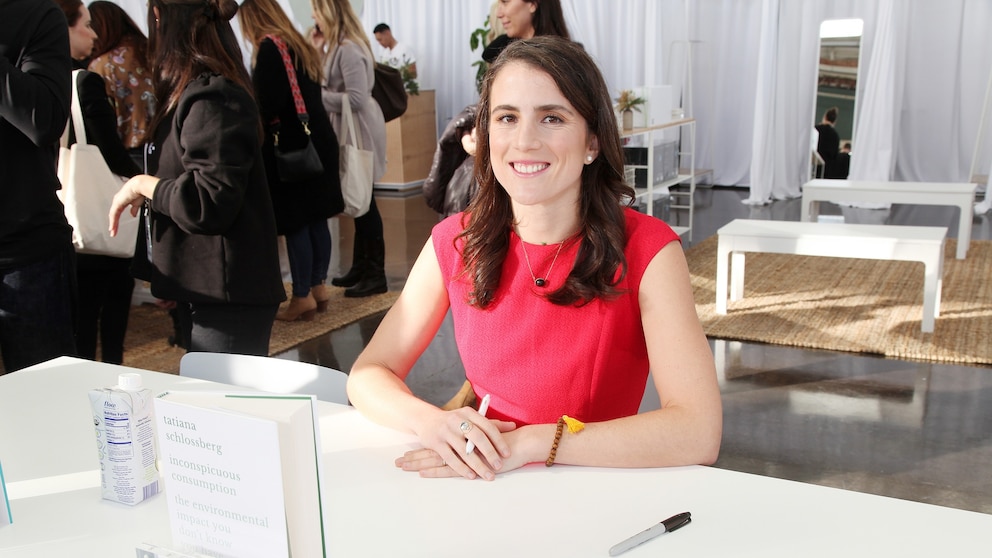
From Newborn Tears… To Words That Stole The Air From The Room
Doctors stared at the numbers.
A healthy white blood cell count sits between 4,000 and 11,000.
Tatiana’s was 131,000.
At first, they hesitated. Was it a postpartum abnormality? A rare hormonal storm caused by childbirth? Tatiana clung to the fragile happiness in the room and told her husband what every new mother wants desperately to believe:
“It’s not leukemia.”
But it was.
At just 34 years old — a journalist, environmental advocate, daughter of Caroline Kennedy, and now the mother of a newborn — Tatiana was diagnosed with acute myeloid leukemia, an aggressive blood cancer carrying a rare mutation more commonly found in elderly patients.
In the space of ten minutes, her life split into two irreversible timelines:
Before the diagnosis.
And everything after it.
A New Life Taken Away From Her Arms

Her newborn daughter was gently taken to the nursery.
Tatiana’s parents arrived carrying her toddler son. He climbed onto her hospital bed and pretended to drive it like a bus, laughing innocently — unaware his mother was quietly preparing for the fight of her life.
She barely had time to introduce him to his baby sister before she was rushed into emergency treatment.
Five weeks trapped inside a hospital room.
Punishing rounds of chemotherapy.
A catastrophic postpartum hemorrhage that nearly killed her — twice — in the same month.
And still, somehow… she laughed.
When Humor Becomes Armor Against Death
Tatiana joked that her doctors suffered from “Munchausen by proxy” — collecting rare cases as if fate were playing an absurd game.
When chemotherapy stripped her hair and bruises bloomed across her body, she nicknamed herself:
“A beat-up Voldemort.”
It was not denial.
It was defiance.
Her room transformed into a quiet battlefield of tenderness — children’s drawings taped to walls, tiny paint kits scattered across tables, endless cans of seltzer delivered by friends. Nurses whispered jokes and bent rules so she could sit cross-legged on the floor and play with her son.
In the smallest acts of normal life, she learned how to stay alive.
A Sister’s Blood… And A Stranger’s Gift
A bone marrow transplant became her best chance at survival.
Her sister was a perfect match.
For hours, she donated stem cells — even joking whether Tatiana might inherit her banana allergy along with the transplant.
For a moment, hope returned.
Then the cancer came back.
A second transplant followed — this time from an anonymous donor somewhere in the Pacific Northwest. Tatiana imagined him as a flannel-wearing lumberjack or a Seattle software engineer. She longed to tell him what his blood had given her:
More time with her children.
Again… remission.
Again… relapse.
Each rise of hope was followed by another fall.
Not a battle.
A cycle.
A Marriage Rewritten By Survival

Through every collapse and every revival, her husband George never left her side. A physician himself, he slept on hospital floors, sprinted home to put their children to bed, then returned before dawn with food in one hand and exhaustion in his eyes.
Tatiana admits illness stole the future they once imagined.
Yet she also admits something else — that she feels impossibly lucky to have found him at all.
Her son became her anchor. The first night she returned home after weeks away, he looked around the house and whispered:
“It’s so nice to meet you in here.”
Her daughter, still too young to understand mortality, stomped through the house in rain boots and plastic pearls, laughing into a toy phone.
Tatiana gathered each moment like seashells — painfully aware the tide was rising.
Fighting For Time Inside A Fragile System
Clinical trials followed.
Immunotherapy.
CAR-T treatments.
Then came the complications:
lung failure,
kidney crises,
graft-versus-host disease.
Quietly, her doctors laid out a future measured not in decades — but in months.
From her hospital bed, Tatiana watched political battles threaten the very medical research keeping her alive. The irony was brutal: as she fought for survival cell by cell, the systems meant to save lives trembled under the weight of power and neglect.
And still, she wrote.
Still, she remembered.
Still, she hoped.
She Was Born Into History… But This Courage Is Hers Alone

Tatiana once dreamed of writing a book about the ocean — about protecting what we can before it disappears. Later, she learned one of her chemotherapy drugs was derived from a Caribbean sea sponge.
Even at her lowest, the world she loved reached back in the most unexpected way.
Now, her life arrives in waves: childhood summers, her children’s laughter, her husband’s hand wrapped tightly in hers — and the words she leaves behind, fragile and fierce.
Born To Die… But Choosing To Live
Tatiana Schlossberg is not merely battling cancer.
She is battling time.
She became a mother… and was handed a death sentence within the same breath.
She stood at the doorway between two worlds — one where life had just begun, and another where it might soon end.
And she chose to step forward.
She chose to stay.
She chose to live — not because it was guaranteed…
but because her children were waiting on the other side of fear.
And in that choice, she has written a story that will outlast even the most powerful names she was born into.
Not a Kennedy story.
A human one