

It was a moment that no one saw coming — and yet, once it happened, no one could stop talking about it. On an otherwise ordinary evening of Jimmy Kimmel Live!, the comedian known for his sharp wit and easy charm suddenly transformed into something else entirely: a voice of piercing truth. Millions of viewers around the world watched as Kimmel’s usual humor gave way to a raw, searing confrontation — a moment that left audiences breathless, shocked, and eager to discuss what they had just witnessed.
“HEY PAM! YOU’VE NEVER TRULY UNDERSTOOD THE PAIN OF OTHERS!’’ Kimmel’s words rang through the studio like a clap of thunder. And then came the line that would ignite countless debates online: “Only by reading this book will you earn my respect.”

For anyone tuning in expecting lighthearted banter, the moment was jarring. Jimmy Kimmel, a man who often trades in clever quips and playful jabs, suddenly became a vessel for the kind of confrontation we rarely see on late-night television. Gone were the jokes, the comforting laughter cues, the soft landing pads that usually cushion his interviews. In their place was an unflinching demand for accountability — a direct gaze into the uncomfortable truths that Pam Bondi, former Florida Attorney General, had skillfully avoided for years.
The audience in the studio gasped. Millions at home paused mid-sentence, mid-scroll, unable to look away. Even the seasoned staff behind the cameras seemed to sense that something extraordinary was unfolding. The air was thick with tension, the kind that makes you lean closer to the screen, your heartbeat syncing with the rhythm of the moment.
So what made Kimmel’s confrontation so magnetic? At first glance, it might appear as just another late-night spectacle — a celebrity calling out a politician. But what happened that night went far beyond entertainment. It touched a nerve that resonates with something deeper, something almost primal: the human need to be seen, to have one’s pain acknowledged, to witness truth being spoken in a world where it is often carefully avoided.
Kimmel did not raise his voice. He did not resort to theatrics or threats. Instead, his words were weighted with the kind of heartbreak that comes only from witnessing suffering and loss firsthand — the kind of suffering that cannot be soothed by platitudes, deflections, or political rhetoric. Every sentence he uttered was measured, deliberate, and devastating in its precision. He was, as millions recognized in real-time, a man holding up a mirror — and that mirror reflected a truth Pam Bondi could not hide from.
Bondi, for her part, attempted to maintain composure. Her carefully constructed demeanor — honed over years of political battles and public scrutiny — wavered for the briefest moment. It was fleeting, almost imperceptible, but it was enough to make the studio audience gasp again. Even those who had long disagreed with her could sense that the veneer of control was cracking. And that, perhaps, is why this moment captured the world’s attention: because it revealed a vulnerability that public figures rarely allow anyone to see.
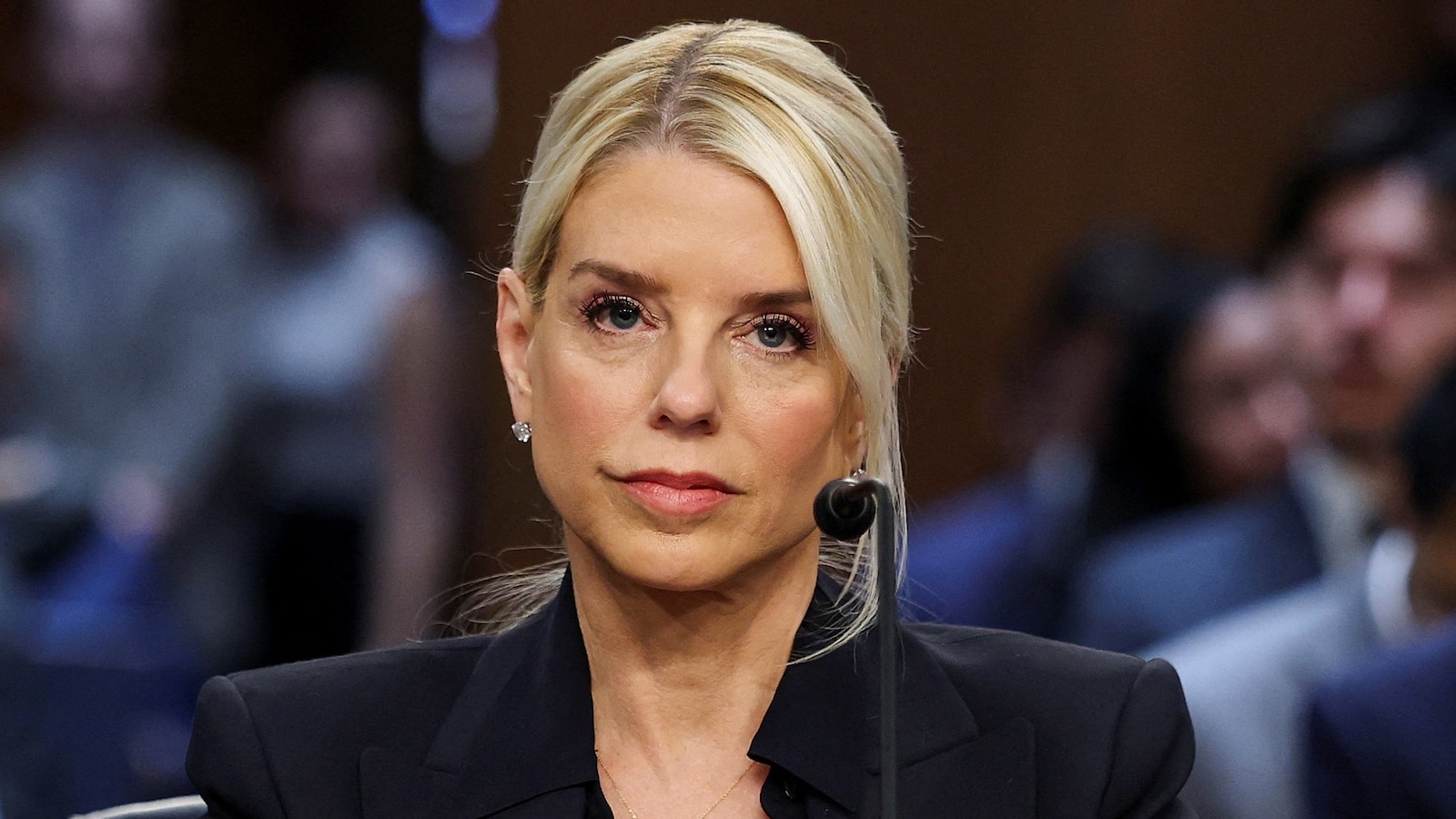
The reaction was instantaneous. Within minutes, social media exploded. Clips of the moment were shared millions of times, dissected, debated, and replayed. The hashtags #KimmelCallsOutBondi, #TruthOnAir, and #PainNotIgnored trended on Twitter. News outlets scrambled to report on what had just happened, with headlines emphasizing not scandal, not gossip, but raw accountability. People were talking about the words, the weight of those words, and the way they pierced through the protective armor of someone in power.
Experts in media and political communication were quick to analyze the moment. Many noted that what made Kimmel’s confrontation so compelling was its honesty. Unlike many public spats, there was no room for spin or deflection. Kimmel’s words were not designed for shock value alone; they were a deliberate act of moral clarity, a public call to acknowledge the pain that too often goes ignored.

Psychologists also weighed in, noting the rare power of a moment that combines celebrity influence with genuine emotional intensity. “What Jimmy Kimmel did was not just entertainment,” said Dr. Elaine Matthews, a media psychologist. “He created what we call a ‘truth pivot.’ It’s the point at which viewers are forced to confront a moral reality they may have only sensed peripherally. And he did it without anger or theatrics — which makes it all the more piercing.”
But the ripples of that night extended far beyond television and social media. Conversations ignited in living rooms, offices, classrooms, and online forums. People debated the implications of Kimmel’s statement, speculating on what it meant for Bondi’s public persona, her political future, and even her personal conscience. More importantly, they discussed the larger societal question: how often do those in power truly understand the pain of others? And when they fail to do so, what can, or should, be done?
Interestingly, the book Kimmel referenced — the one he said would earn Bondi his respect — became a viral phenomenon in its own right. Searches for the book surged, online reviews multiplied, and a conversation about the themes it explores became a cultural flashpoint. Readers and commentators speculated endlessly: what was in those pages that could evoke such emotion? What truths were so essential that they demanded acknowledgment on national television?
Some critics tried to dismiss the episode as a “stunt” or “calculated theater,” but those who watched carefully knew better. This was not a typical late-night prank or a scripted confrontation. It was a moment when a public figure used his platform not to amuse, but to illuminate — to demand accountability in a way that was uncomfortable, undeniable, and unforgettable.
In the days that followed, media outlets described the scene as a “media earthquake,” a phrase that, for once, felt wholly accurate. Commentators debated whether such moments are rare sparks of moral courage or evidence that traditional channels of accountability are failing. Social media continued to buzz, with millions dissecting facial expressions, intonation, and the pauses between Kimmel’s words. Every detail mattered, because the moment itself had become a mirror reflecting the broader anxieties, hopes, and frustrations of society.
Perhaps the most remarkable aspect of all this is how a few sentences, spoken with honesty and conviction, could resonate so widely. In a world inundated with endless content, where every story competes for attention, Kimmel’s confrontation stood out not because it was loud, flashy, or viral by design, but because it was true. It reminded millions that sometimes, the simplest, most honest words are enough to cut through years of deflection, polish, and pretense.

And for those who watched it unfold live, there was an undeniable sense that something had shifted. Not just in the dynamic between a comedian and a politician, but in the broader conversation about accountability, empathy, and the courage to speak truth to power. For one fleeting, unforgettable night, Jimmy Kimmel reminded the world that laughter can coexist with truth, that confrontation can coexist with respect, and that even in the glitzy world of late-night television, real moments — moments that make you hold your breath — are still possible.
In the end, the phrase that started it all lingers: “HEY PAM! YOU’VE NEVER TRULY UNDERSTOOD THE PAIN OF OTHERS! Only by reading this book will you earn my respect.” Those words, simple yet devastatingly precise, became more than a viral moment; they became a cultural touchstone, a conversation starter, and for many, a reminder that truth — no matter how uncomfortable — matters.
Millions are still talking about it. Millions more will talk about it for years. And in a media landscape often dominated by fleeting controversies and manufactured drama, that is no small achievement.
Truth, it seems, doesn’t always need to shout. Sometimes, it just needs to be spoken — and heard.